Made-to-measure shallow wardrobes in Mijas
A hallway, an entrance hall or the side of a living room rarely offers sixty centimetres of depth, and yet you still need somewhere to put things. Made-to-measure shallow wardrobes in Mijas make the most of those thirty or forty centimetres with shelves, angled shoe racks and doors that don't get in the way. The key is to tell apart the depth you measure on the wall from the depth you can actually use inside.
Shape your next wardrobe.
Try out the measurements, plan the interior layout and choose your finishes. See your idea take shape and share it with us so we can prepare your quote.
Send us your configuration with your measurements and we'll give you a guide price within 24 hours, free of charge. The measuring visit at your home comes afterwards.
Total depth and usable depth
The depth you measure with a tape from the wall to the edge of the door is not the same as the depth you can use inside. The side boards, the back panel and the door hardware take up between three and six centimetres. In a shallow wardrobe every centimetre counts, and that difference decides what fits.
That is why we measure twice: the maximum depth of the recess and the free depth you can occupy without getting in the way of the walkway. From there we work out the real usable depth inside. If you are looking for a shallow wardrobe for an entrance hall, it is normal for the final figure to be a few centimetres less than the one you first imagined.
What can you store in thirty or forty centimetres?
A narrow wardrobe won't take a shirt on a standard hanger, which needs around fifty centimetres, but it solves far more than you might think. With thirty centimetres you can fit shoes on angled shelves, coats on side hooks, books, archive boxes, cleaning products and baskets for accessories.
With forty centimetres, hangers can be turned sideways on a pull-out rail that rotates ninety degrees so the clothes face forward. It is a specific hardware solution that lets you hang clothes in a shallow depth without giving up on order. It is worth making a list of what you want to store before deciding on the depth.
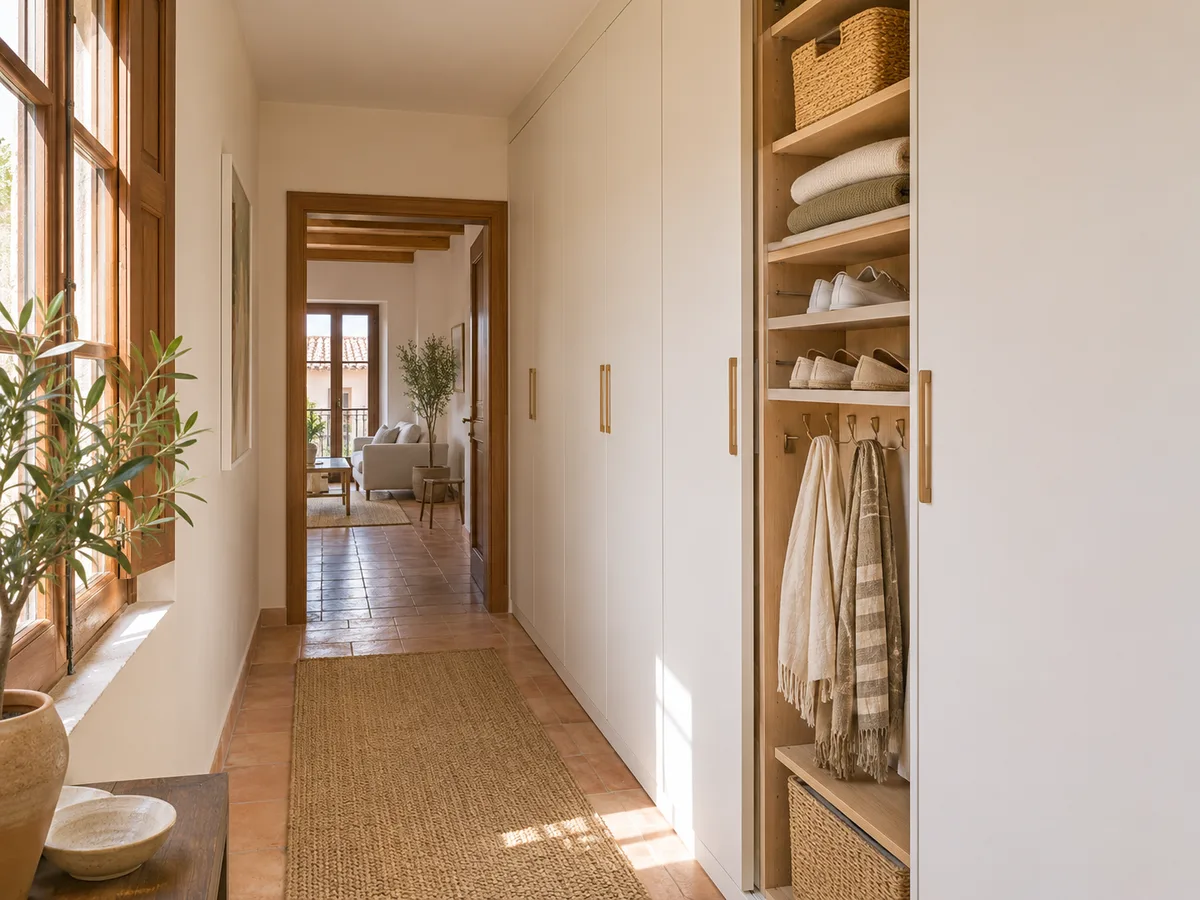
Shelves, shoe racks and front-facing rails
In a shallow depth, the interior layout does the work. Adjustable shelves can be set to the height of each item so you don't waste vertical space, and angled shoe racks store shoes toe-first in under twenty centimetres per row.
Front-mounted hooks, fixed to the inside of the door or to a side panel, free up the central shelves. A fold-down rail makes use of the top space, and narrow pull-out baskets are ideal for scarves, caps or keys. The back of the doors can also be used, with flat trays for an iron, cloths or cleaning items. Every element is drawn to scale in the design so you can see what fits and what is better left out before we make anything.
Have you already measured the space?
Send us a photo and the approximate measurements on WhatsApp and we'll give you some initial guidance.
Doors that respect the walkway
- 01
A shallow wardrobe usually sits in a transit area, where a hinged door opened wide narrows the way through. That is why sliding doors are a common choice, since they don't intrude into the hallway, although they always leave one section of the wardrobe covered.
- 02
Other alternatives are narrow doors that open to ninety degrees with little swing, or bifold fronts. In a short stretch of hallway, a forty-centimetre door can work better than an eighty-centimetre one. Sliding doors are not always the best answer, and on the plan we compare the options with the door travel drawn in.
Skirting boards, pillars and uneven walls
The shallow depth of a recess is usually down to a pillar, a downpipe or a change in the thickness of a partition wall. A wardrobe in these recesses has to follow every projection in the wall, and it is not unusual for the dimensions to vary by a few centimetres between the top and the bottom.
Skirting boards also change the usable depth: if the wardrobe sits against the skirting, you lose depth; if it is cut back, you gain it. We measure the walls at several points and set a fitting tolerance that absorbs any irregularities. A closing trim hides the join with the wall and stops it looking like a badly finished gap.
Latest work by SI, ARMARIO
@si.armario
Made-to-measure wardrobes and walk-in wardrobes
Latest posts
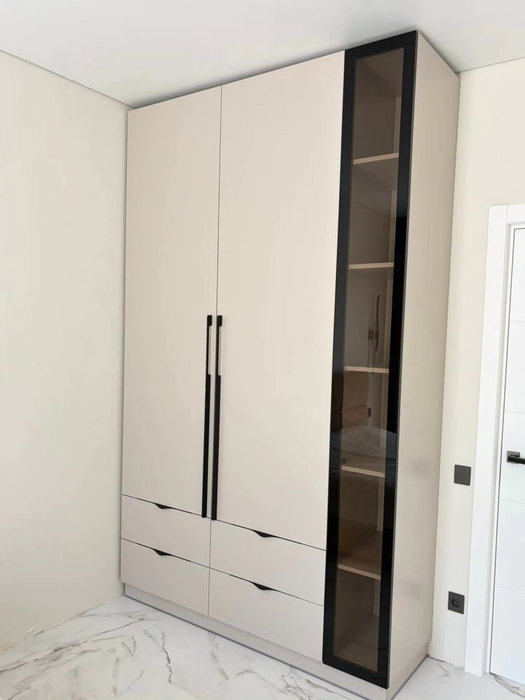
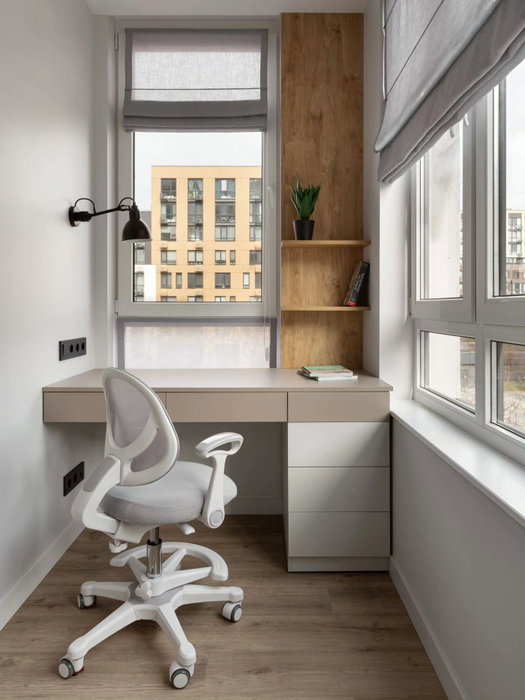
Hallways, entrance halls and recesses behind the door
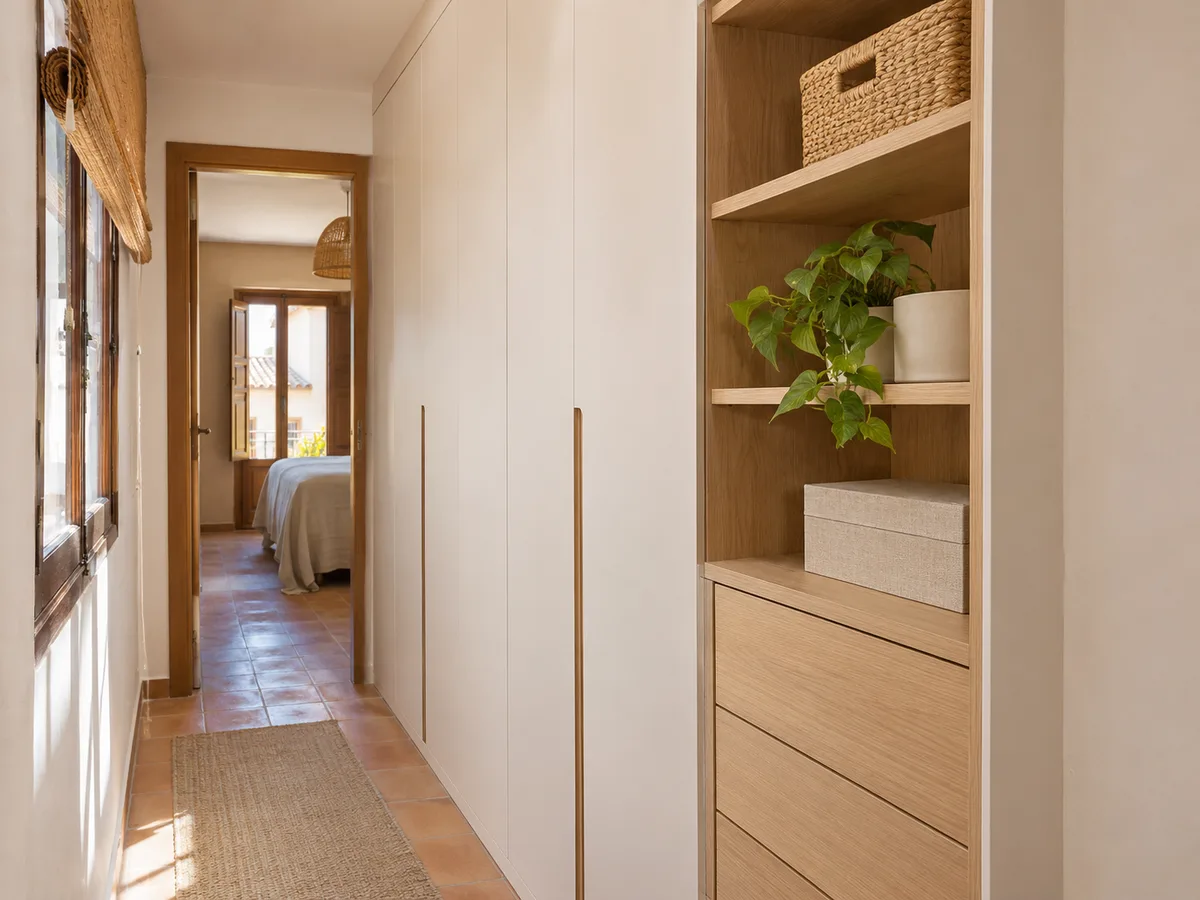
Shallow recesses appear in very specific places: the entrance hall of a flat in Mijas, the stretch of hallway leading to the bedroom, the wall behind the front door or the side of a living room. Each one poses a different challenge.
In an entrance hall, the narrow wardrobe holds coats, bags, shoes and keys; in a hallway, doors without a protruding handle work best; behind a door, the wardrobe must allow for the swing of the door. If the recess is very short, a tall, narrow wardrobe with deep shelves does more than a wide, low one.
Ask us to come and measure up in Mijas
- 01You leave us your name and your area.
- 02We message you on WhatsApp to agree a day.
- 03The measuring visit costs €50 and is free if you place an order.
When it is worth gaining depth and when it isn't
Sometimes a shallow wardrobe is a choice, and sometimes a compromise. If you can give the wardrobe another ten centimetres without narrowing the walkway, clothes fit on standard hangers and the interior is far better organised. You notice that gain every day.
But taking over a hallway to gain depth rarely pays off. In a ninety-centimetre passage, losing ten is feeling the front brush against you every morning. A good rule of thumb is always to leave a clear strip of around eighty centimetres and spread the storage upwards: a narrow wardrobe that reaches the ceiling stores far more than a deep, low one.
Finishes that lighten up a hallway
- 01
In a narrow area, the finish affects how the space feels. Light tones and flat fronts, with no protruding handles, make the wardrobe look lighter and reflect the light better. A mirror on one door visually enlarges the entrance hall and is handy for a last look before you head out.
- 02
Dark-coloured fronts add character, but they weigh down a short hallway. A middle way is to combine a plain light door with an open-shelf unit in the colour of the wall, so the whole thing blends into your home in Mijas without dominating it.
Which measurements and photos to send
To assess your shallow recess, send the width at three heights, the depth at the top and bottom, and the height to the ceiling. Add the clear distance from the future front to the opposite wall, because that figure determines the walkway that must be left.
Photos help: a general shot of the wall, one of the floor and another of any projection. With the configurator you can set the maximum depth and choose narrow units. The team will reply with an estimated price based on those measurements. The measuring visit costs €50, which is waived if you order the wardrobe; manufacturing takes two to three weeks on average.
Enquiry
Tell us about your project in Mijas
- 1We read your message and look at your photos.
- 2We reply on WhatsApp with a first figure.
- 3We measure up and prepare the final quote. The measuring visit costs €50 if you don't go ahead with the order and is free if you do.
We don't cut a single board until you've approved the design and the price.
Questions
Frequently asked questions about wardrobes in Mijas
After installation: warranty and care for your wardrobe.
Is a wardrobe only 40 cm deep worth it?
Yes. With forty centimetres you can fit shelves, angled shoe racks, baskets and a pull-out rotating rail. For clothes on conventional hangers you need a little more depth, or a rail oriented differently.
How much depth do I need to hang clothes on hangers?
The usual figure is around fifty or fifty-five centimetres. With less depth, you can use turned hangers, front-mounted hooks or folded clothes on shelves.
Are sliding doors always the right choice?
Not always. They avoid the door swing, but they cover one section and take up some depth because of the tracks. In some hallways, narrow doors or bifold fronts work better.
Can a hallway be used without narrowing the walkway too much?
Yes, by measuring the clear width left in front of the wardrobe. The best approach is to leave a comfortable walkway and adjust the depth of the wardrobe to suit.
What happens if the wall isn't straight?
We measure at several points and design with a tolerance, so the wardrobe follows the wall without leaving any visible gaps.
Shall we talk about your project?
Send us a photo of the space and some approximate measurements on WhatsApp: we'll give you some initial guidance and arrange the measuring visit.